
New project? Want to cast on the first stitches right away? Just dive in?
Almost every knitting pattern includes a note about the gauge swatch. Every ball of yarn has a label telling you how many stitches and rows you’ll get in a 10x10cm square with a specific needle size. All of this shows how important this information apparently is—yet the gauge swatch isn’t exactly a source of joy.
What is a gauge swatch?
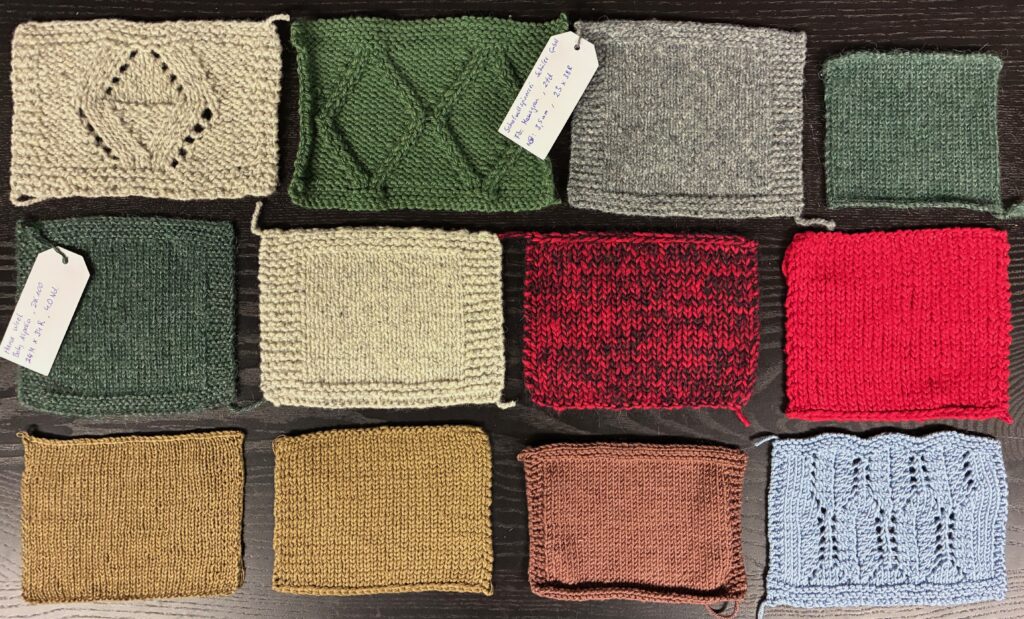
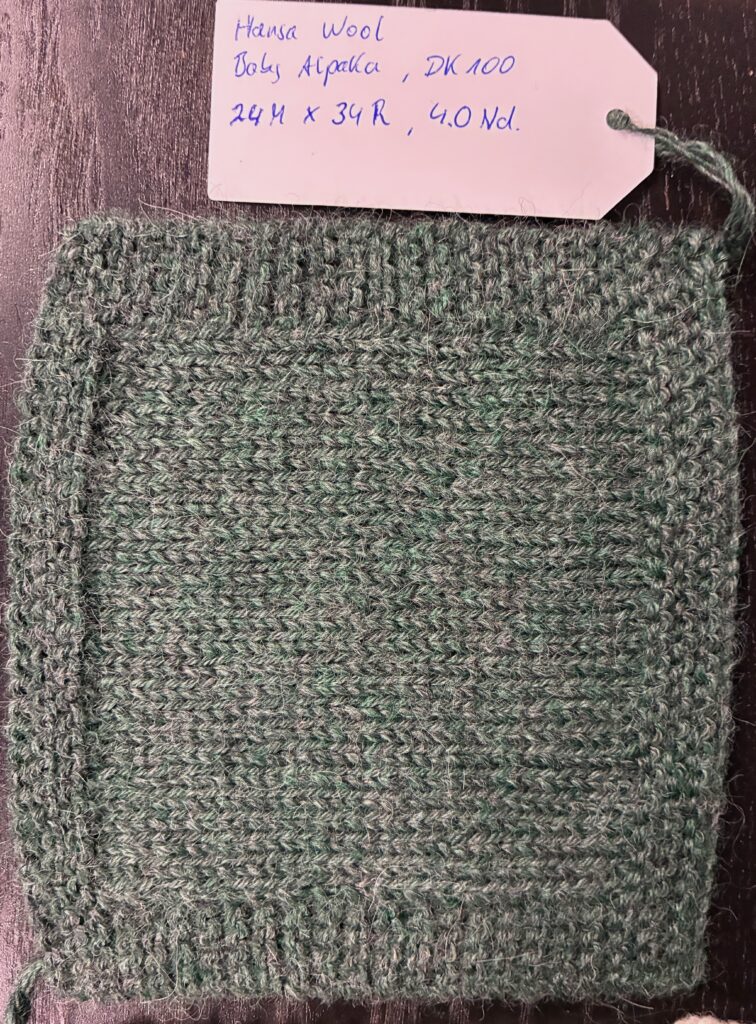
A gauge swatch is a small square piece of knitting, usually worked in stockinette stitch, which is washed and measured after knitting.
What does the gauge swatch tell me?
Yarns have different properties and thicknesses. Every knitter holds the yarn differently and knits more loosely or more tightly. Every needle size changes the look and feel of the result. And on top of that, all these factors influence each other.
A gauge swatch gives you a feel for your upcoming project, and most importantly, it tells you how many stitches and rows you’ll need for a certain length. So it gives you a concrete answer as to whether all the components (yarn, needle size, and knitting style) match the pattern, or whether you need to make adjustments.
How do I make a gauge swatch?
Generally speaking, for a gauge swatch you cast on as many stitches as you estimate you’ll need for about 10cm in width. If you don’t know how many stitches that might be, you’ll almost always find a note on the yarn label telling you how many stitches make up 10cm. It’s important to use the needle size specified.
Then knit all the stitches on the right side and purl the wrong side. Keep going until the swatch measures about 10cm in height. Afterward, wash it as instructed for the yarn, lay it flat, let it dry, and your swatch is ready.
Personally, I knit the first 3 rows (both right and wrong side) entirely in knit stitches and add 3-5 extra stitches on each side for the swatch’s borders. I knit these border stitches in knit stitch on every row as well. This way, the swatch curls less and the knitted fabric shows the stockinette section much more clearly.
So what’s the point of this gauge swatch?
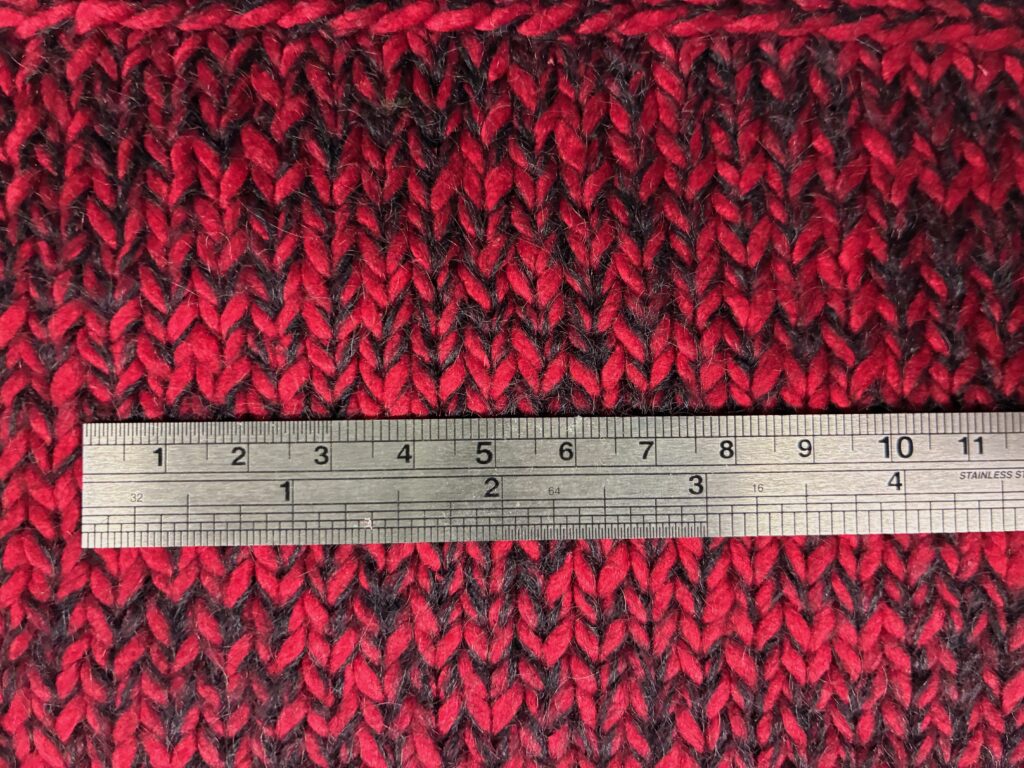
Thanks to the swatch, you can use a ruler to measure exactly how many stitches make up 10cm in width and how many rows make up 10cm in height. You can then compare this information to the gauge given in the pattern. If the numbers roughly match (± one stitch or row, depending on the total count), the finished piece from the pattern will also come out the size you expect.
If the numbers don’t match, you can make adjustments. For example, you can switch to a smaller or larger needle size. A smaller needle will increase the stitch count, while a larger one will decrease it. You can also change the yarn and use a different weight.
Because you can identify all of this (and fix it if needed) before spending hours on a pattern, the gauge swatch is so important. Once you’ve started, you can no longer adjust your needle size or yarn. It’s even worse if you finish the project and, after washing, discover it’s turned out far too big. A washed gauge swatch can prevent exactly that.
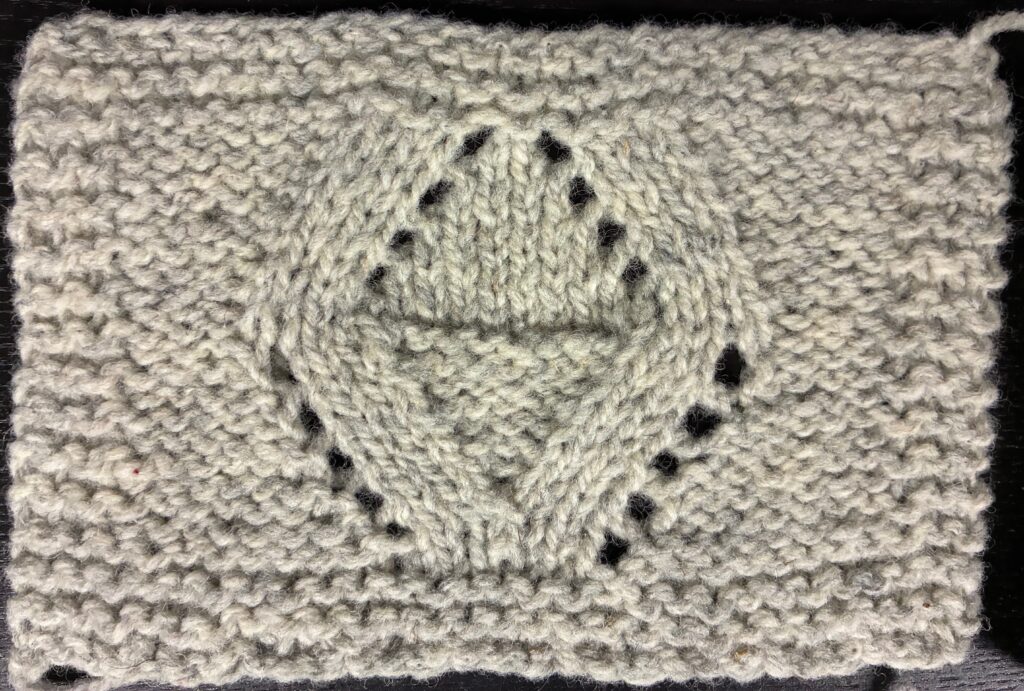
Gauge swatches are also a great way to test patterns and their repeats. Once knitted and washed, patterns often look different than intended. Here too, it’s much easier to make visual adjustments and experiment before it becomes a problem halfway through your actual project.
Do I always need to make a gauge swatch?
Yes, if you’re
- trying out new stitch patterns, instructions, or projects
- using a new yarn
- using new knitting needles (for example, wooden needles knit differently—tighter or looser—than metal ones)
Since this applies to pretty much every case, you could say “always.” Of course, over time you develop a certain feel for it and can treat gauge swatches of similar yarns as equivalent. Personally, I always make a gauge swatch if I’m not 100% sure.
Conclusion
A gauge swatch is no fun. You want to dive into your actual project—you’ve bought beautiful yarn, maybe even new knitting needles, and you already have the pattern in front of you. The desire to knit a swatch, wash it, and wait for it to dry understandably falls by the wayside.
But the frustration is much greater afterward, if you’ve spent 10 or 20 hours on a project and nothing quite fits. A gauge swatch can help you avoid that.